
The morning dashboard: five numbers to see before nine
· 4 min read
Most dashboards show everything and answer nothing. Five numbers an owner should see every morning, and how to decide what stays off the screen.
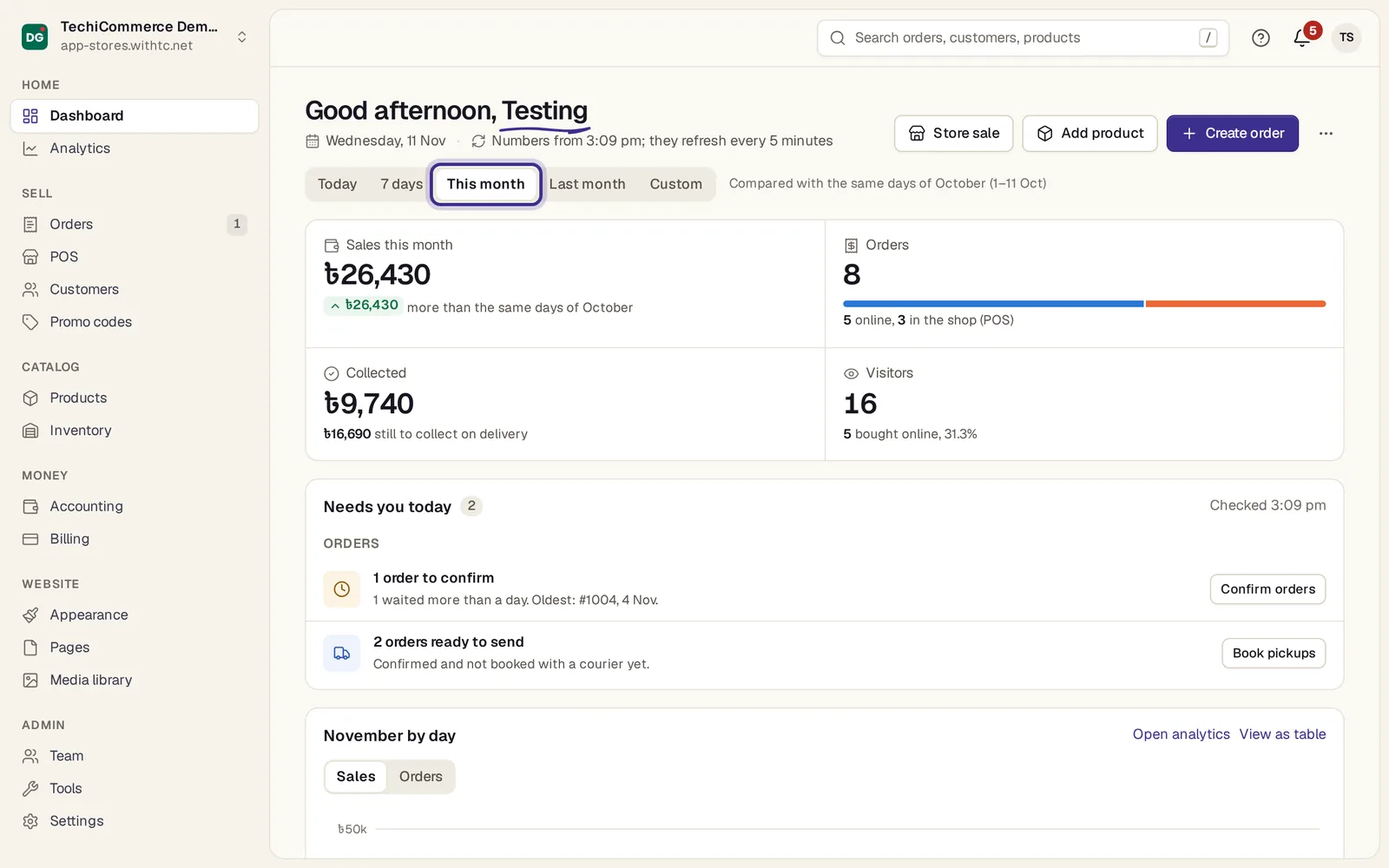
Ask an owner what they want from new software and "a dashboard" comes up in the first minute. Ask what should be on it and the answer is usually "everything". That is how dashboards end up with twenty charts that nobody opens after the first week.
A dashboard has one job. It should tell you, in the time it takes to drink half a coffee, whether today needs you or not. Five numbers are enough for that. Here is how to pick them.
Number one: money in, compared with something
Sales so far today means little on its own. Is that good? You only know when it sits next to a comparison: the same weekday last week, up to the same hour. A number with a comparison is information. A number alone is decoration.
Ask for the comparison to be fair. Comparing a Monday morning with all of last Monday makes every morning look like a disaster.
Number two: money that has actually arrived
Sold and collected are different things. An order paid on delivery is a sale today and cash some days later. An invoice is revenue on paper until the transfer lands. Businesses that watch only the first number are regularly surprised by their bank balance.
Put the two side by side: what was sold, and what was collected. The gap between them is money someone else is holding for you, and it deserves its own line.
Number three: what is waiting on you
This is the most useful part of any dashboard, and the one most often left out. Not a chart. A short list of things that are stuck until a person acts:
- Orders waiting to be confirmed, and how long the oldest has waited.
- Bookings without a confirmed place or trainer.
- Quotes sent with no answer.
- Bills due this week.
Each line should take you straight to the list behind it. If the dashboard shows a problem and you still need four clicks to reach it, people stop looking.
Number four: the thing that is running low
Every business has one resource that quietly runs out. For a shop it is stock. For a clinic it is free appointment slots. For a course provider it is seats on the next session, or the lack of people in them.
Pick the one that hurts you most when it reaches zero and show how many are close to it. Not the full inventory. Just the count of items near the line.
Number five: who came, and who bought
If you sell or take bookings online, you need to see visitors next to orders. Lots of visitors and few orders is a different problem from few visitors. One needs a better page. The other needs more people to see it.
What stays off the screen
Everything else. That sounds harsh, so here is the test we use: for each number someone wants to add, ask "what would you do differently if it changed?" If nobody has an answer, it belongs in a report you open once a month, not on the page you open every morning.
A few more rules that keep a dashboard honest:
- It fits on a phone. Owners check from the car park, not from a desk.
- It says how fresh the numbers are. "As of ten minutes ago" stops arguments.
- It lets you switch between today, this week and this month without leaving the page.
- It uses your words. If your team says "jobs", the screen should not say "work orders".
Decide this before any code is written
The dashboard is a good place to start a software project, because it forces the real questions early. What do you check every morning now, and where do you get it from? Which of those numbers do you trust? Which decision did you get wrong last quarter because you saw the number too late?
Write the five numbers down, with where each one comes from. That single page tells a developer more about your business than an hour of describing features.