
Start with the reports: plan software from the answers you need
· 4 min read
Most software projects start with screens and end with reports nobody trusts. Why to list the questions first, and how that changes what gets built.
Software projects usually begin with screens. Someone sketches a form for adding customers, a list of orders, a page for products. Reports come last, in a line near the bottom of the scope that says "reporting".
Then the system goes live, the owner asks a simple question, and the answer is "we do not store that". The date a job was finished was never recorded. Discounts were typed into a notes box. Nobody saved who approved the refund.
Reports are not something you add at the end. They are the reason the system exists. Planning from them first changes what gets built.
Write the questions, not the reports
Do not start by describing charts. Start by writing the questions you want answered, in the words you would use on a Monday morning:
- How much did we sell last week, and how does that compare with the week before?
- What did we keep after costs?
- Which products or services bring in the money, and which only look busy?
- Who on the team gave the most discount?
- Which customers have stopped coming back?
- What is owed to us, and how old is it?
Ten or fifteen questions is plenty. Next to each one, write what you would do with the answer. A question nobody would act on can go.
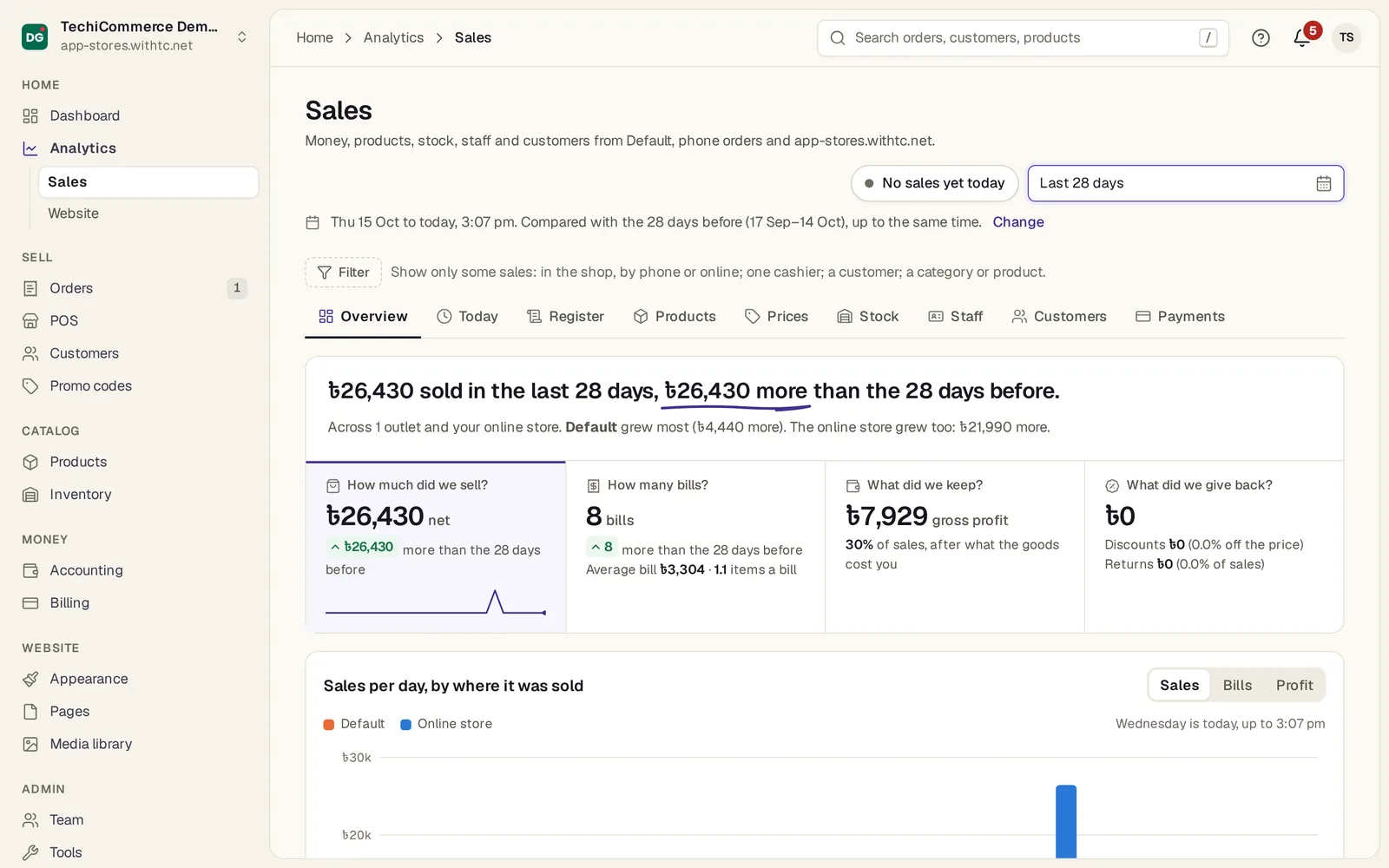
Every question needs data behind it
Now take each question and ask what must be recorded for it to be answerable. This is where the scope really gets written.
"What did we keep after costs?" needs a purchase cost on every product, and a rule for what happens when that cost changes. "Who gave the most discount?" needs each sale tied to a person, which means separate logins. "Which customers stopped coming back?" needs one record per customer across every channel, not one per order.
Each of those is a decision about forms, fields and permissions. Made early, it is a line in the scope. Discovered after launch, it is rework, and the old data can never be filled in.
Decide what a word means
Half of all reporting arguments are about definitions. Before any code, agree in writing on the ones that matter to you:
- Is a sale counted when the order is placed, or when the money arrives?
- Do returns reduce the day they were sold or the day they came back?
- Is "revenue" before or after discounts and delivery charges?
- When does a customer count as new?
There is no right answer to these, only a consistent one. Put the definition on the report itself, in small print under the number, so two people looking at the same figure read it the same way.
Fewer numbers, each with a comparison
A report with forty figures gets ignored. A report with four gets read. For each figure, show what it is compared with: the period before, or the same days last year for seasonal trade. A number that cannot be compared cannot tell you whether to worry.
Then give people a way down. A total should open into the lines behind it, so that when a figure looks wrong someone can find out why in a minute.
Who sees what
Decide which reports are for whom. A shop manager needs their own outlet. An accountant needs money in and out, and a file to download. An owner needs the whole picture on a phone. Not everyone should see profit, and that is a rule to set at the start, not to bolt on later.
What this does to the project
Planning from the reports first tends to make the first version smaller, not larger. Features that feed no question get pushed back. Fields that looked optional become required. And the developer learns how the business thinks about itself, which shows up in every screen afterwards.
It also gives you a clean test at the end. When the system is ready on a test site, enter a week of realistic work and open the reports. If the questions you wrote at the start are answered, it works. If not, you found out before your customers did.